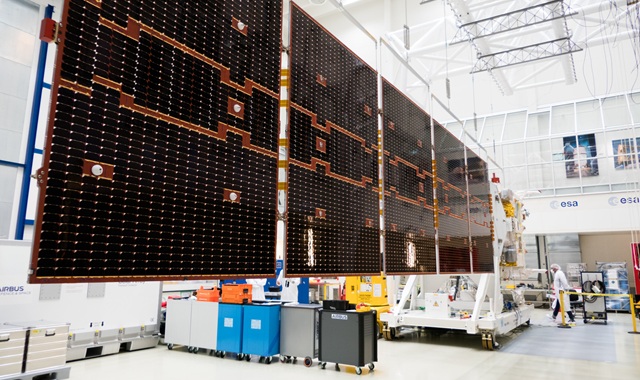
Picture this: a satellite the size of a bus hurtling through the radiation-soaked vacuum of geostationary orbit, or a CubeSat the size of a shoebox zipping around Earth at 17,000 mph. Both rely on the same unsung hero — a wafer-thin solar cell assembly no bigger than your hand. These aren't your rooftop panels. They're space-qualified solar cell CICs (Cell-Interconnect-Coverglass), battle-hardened packages that must survive launch shocks, thermal extremes from –150°C to +150°C, and decades of cosmic bombardment.
And here's the shocker: after 30+ years of innovation, one material family still crushes every challenger. Gallium arsenide (GaAs) and its III-V cousins aren't just winning — they're expanding their empire. Let's dive into what's actually available on the market right now and why silicon is fading into the background.
The 2026 Lineup: From Budget Silicon to Cutting-Edge Multi-Junctions
Today's commercial CIC market breaks down into three clear categories, each with flight-proven players ready to ship.
1. Silicon CICs – The Reliable Old Guard (For Budget Missions Only)
Still alive for smallsats and cost-sensitive projects, these deliver 15–20% efficiency under the space solar spectrum, some in flexible “self-healing” variants and back-contact designs. They're lighter on the wallet and have decades of heritage, but radiation knocks them down hard — forcing designers to oversize arrays significantly.
2. Triple-Junction GaAs CICs – The Undisputed Kings
This is where 90%+ of modern spacecraft get their juice. Lattice-matched or metamorphic GaInP/GaAs/Ge stacks routinely hit 28–32% beginning-of-life efficiency. There're a good many major suppliers dominating the catalogs right now. These aren't lab curiosities — they're AIAA/ECSS-qualified, radiation-hardened beasts with flight heritage measured in millions of cells and gigawatts on orbit.
3. Quadruple-Junction and Beyond – The New Aristocrats
One or two models of 4-junction cells are now commercially available, promising even higher efficiencies for power-hungry mega-constellations and deep-space probes. True 5- and 6-junction cells remain mostly research-grade (lab records >35–47% under concentration), but the pipeline is filling fast. Perovskite tandems and CIGS thin-films? Still in qualification hell — not yet ready for prime time as full CICs.
The Real Question: Why Does GaAs Refuse to Die?
Efficiency is the headline — 30%+ vs silicon's 17% means you need far less area for the same power. But the deeper reasons explain the total domination:
• Radiation armor: GaAs multi-junctions shrug off fluences that cripple silicon. Specialized variants laugh at high-radiation MEO orbits.
• Mass and stowage mastery: Ultra-thin 80–150 µm cells + lightweight coverglass = unmatched W/kg and folding capability. Critical when every gram costs thousands to launch.
• Heritage that money can't buy: Multi-MW of GaAs cells alone are flying right now. Mission managers sleep better knowing the exact same tech powered Mars rovers, GPS satellites, and Starlink.
• Temperature and low-light superpowers: Better coefficients mean they keep delivering in deep-space cold or eclipse-heavy LEO.
Silicon hangs on for ultra-low-cost CubeSats, but for anything serious — GEO comms, science missions, lunar bases — GaAs is the only sane choice. Market data shows III-V cells holding 47–56% share and growing.
What Comes Next
In 2026 the solar array on your next spacecraft will almost certainly be built from GaAs-based CICs — not because engineers are lazy, but because nothing else matches the brutal requirements of space. The quiet revolution isn't about replacing GaAs… it's about stacking more junctions on top of it.
So the next time you see a satellite glinting in the night sky, remember: that sparkle comes from a tiny, radiation-proof GaAs wafer quietly turning starlight into kilowatts — the same technology that's been quietly winning the space power game for three decades and shows zero signs of slowing down.
What do you think — will perovskite tandems finally break the GaAs stranglehold by 2030, or are we looking at another decade of III-V supremacy?
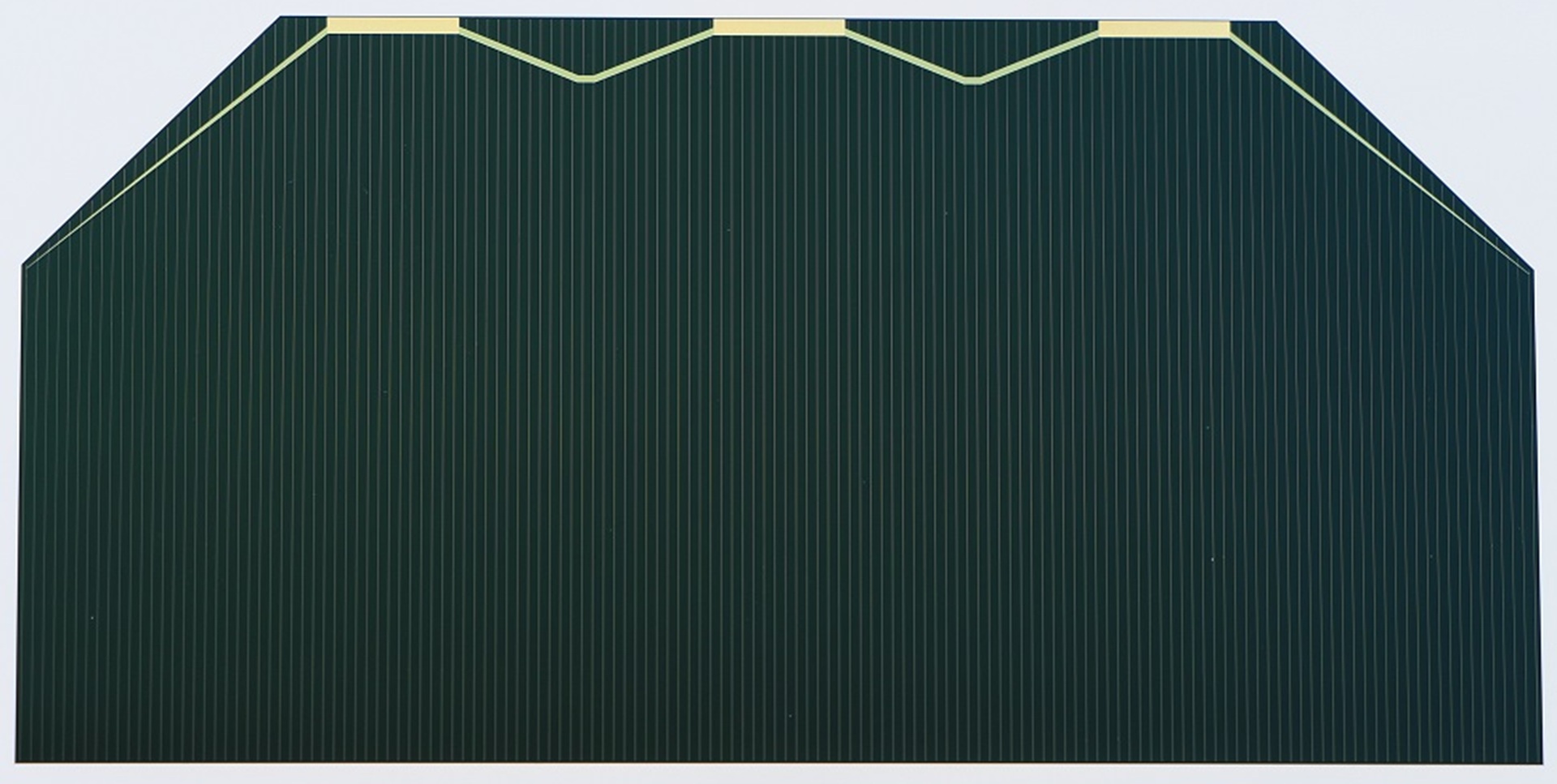
Corevision is proud to introduce our latest Triple-Junction GaAs Solar Cell CICs (Coverglass Interconnected Cells), engineered for space missions demanding the highest power density and reliability. Each CIC integrates a state‑of‑the‑art GaInP₂/GaAs/Ge triple‑junction solar cell on a P‑Ge substrate, delivering a bare cell efficiency of 30%-32% under AM0 illumination. The assembly features a silver‑plated Kovar interconnector with four weld points per piece, ensuring robust mechanical and electrical integration. Housed in a compact 40.1 mm × 80.1 mm footprint with an active area of 30.18 cm², the CICs incorporate a KFG 120 coverglass (custom thicknesses available) and an integrated silicon bypass diode for protection against partial shading. With a low areal weight of ≤115 mg/cm², excellent radiation tolerance (Pmp/Pmp0 > 0.86 after 1×10¹⁵ e/cm²), and thermal emissivity optimized for space thermal control, Corevision CICs provide the ideal building block for high‑efficiency solar panels on CubeSats, small satellites, and deep‑space missions. Backed by our proven track record in aerospace photovoltaics, these CICs deliver the performance, durability, and customization options you need to power your next mission.
Space Qualified Triple-Junction GaAs Solar Cell CICs
Silver-plated Kovar interconnect · Size: 40.1 mm × 80.1 mm · Cell area: 30.18 cm² · Space‑grade triple‑junction GaAs · Efficiency: 30% under AM0 illumination
| Substrate Material |
P-Ge GaInP/GaAs/Ge (Ge-based triple junction epitaxy) |
| Base Material Thickness |
150 µm ± 20 µm |
| Welding Method |
Weld or Solder |
| AR‑coating |
TiOₓ / Al₂O₃ |
| Coverglass |
KFG 120 (standard) | Optional: ITO coverglass or custom thickness |
| Coverglass Thickness |
120 µm (custom thicknesses available) |
| CICs Size |
40.1 mm × 80.1 mm (+0.05 mm tolerance) |
| CICs Thickness |
300 µm ± 25 µm |
| Interconnector Thickness |
30 µm |
| Average Weight |
≤ 115 mg/cm² |
| Bypass Protection |
Si Diode (integrated) |
| Active Cell Area |
30.18 cm² (derived from CICs footprint) |
| Efficiency ηbare [%] |
30% |
| Open Circuit Voltage Voc [V] |
2.74 V |
| Short Circuit Current Density Jsc [mA/cm²] |
17.4 mA/cm² |
| Current @ Max. Power Jm [mA/cm²] |
16.8 mA/cm² |
| Voltage @ Max. Power Vm [V] |
2.42 V |
| Remaining Factors vs. Fluence |
| Fluence (e/cm²) | Voc/Voc0 | Isc/Isc0 | Pmp/Pmp0 |
|---|
| 1 × 10¹⁴ | 0.96 | 0.99 | 0.96 |
| 5 × 10¹⁴ | 0.94 | 0.96 | 0.90 |
| 1 × 10¹⁵ | 0.92 | 0.93 | 0.86 |
|
| Forward Voltage @ +2.5A |
< 1.0 V |
| Reverse Current @ –4.5V |
< 0.7 mA |
| Interconnector Type |
Silver-plated Kovar (silver coated) |
| Pull Test at 45° (single point) |
> 1.6 N |
| Interconnector Weld Points |
4 points per piece |
| Absorption coefficient (α) |
≤ 0.89 |
| Hemispheric emissivity (ε) |
0.82 ± 0.03 |
| Jsc temp. coefficient [µA/cm²/°C] |
12.0 µA/cm²/°C |
| Voc temp. coefficient [mV/°C] |
-5.6 mV/°C |
| Jm temp. coefficient [µA/cm²/°C] |
9.0 µA/cm²/°C |
| Vm temp. coefficient [mV/°C] |
-5.8 mV/°C |